
CRUISSE
Challenging Radical Uncertainty in Science, Society and the Environment -clean

Summary
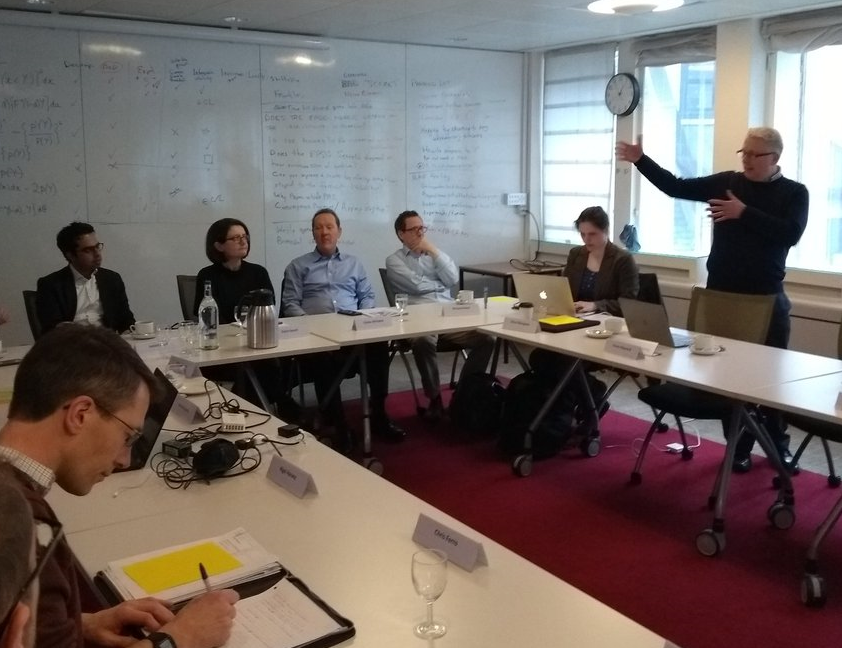
CRUISSE is one of two networks funded by RCUK Decision-Making Under Uncertainty (DMUU). The goal of the CRUISSE network is to develop and build widespread linkages between disciplines related to decision-making under uncertainty to lay the groundwork to form a potential RCUK Decision-Making Under Uncertainty (DMUU) Research and Evidence Hub (the ‘Hub’) whose function will be to co-ordinate expertise and to offer and further develop tools to facilitate resilient and effective decision-making across a full range of real world uncertainty and practice contexts. The value of such a hub will be tested through feasibility projects and interaction with practitioners in government, industry and civil society. It aims to meet the need to collate and publish relevant materials and manuals via a website and have the capacity to respond to immediate, intermediate and long term consultation, research and training requirements. CRUISSE will begin by establishing a highly multidisciplinary network of academics and professionals who will work upwards from real world practice to develop and test the feasibility of two DMUU dynamically evolving tool sets: a Triage procedure and a Code of Practice.
For more information visit the CRUISSE website.

Funded by
RCUK ‘Decision-making Under Uncertainty’ Network call

Principal Investigator
Professor David Tuckett (UCL)

Co-Investigator
Professor Leonard Smith (LSE)

Grant reference
EP/P016847/1

Grant value (to LSE)
£127,561

Project duration
January 2017 – July 2019

Events:
2nd CRUISSE Network Conference, 7 & 8 November 2018

1st CRUISSE Network Conference, 21 & 22 September 2017 – See Programme

Partners include the Bank of England, the Financial Conduct Authority, START Network, National Health England, the Cabinet Office, BP, Lloyd’s of London, DSTL, Natural England and the National Flood Forum.

M2Dcropped Logo
Related Network: M2D – Models to Decisions

The CRUISSE Network is co-funded by three UK research councils: ESRC, NERC and EPSRC

ESRC logo

nerc logo

EPSIS
Evaluating Probability Scores for the Insurance Sector – clean

Summary
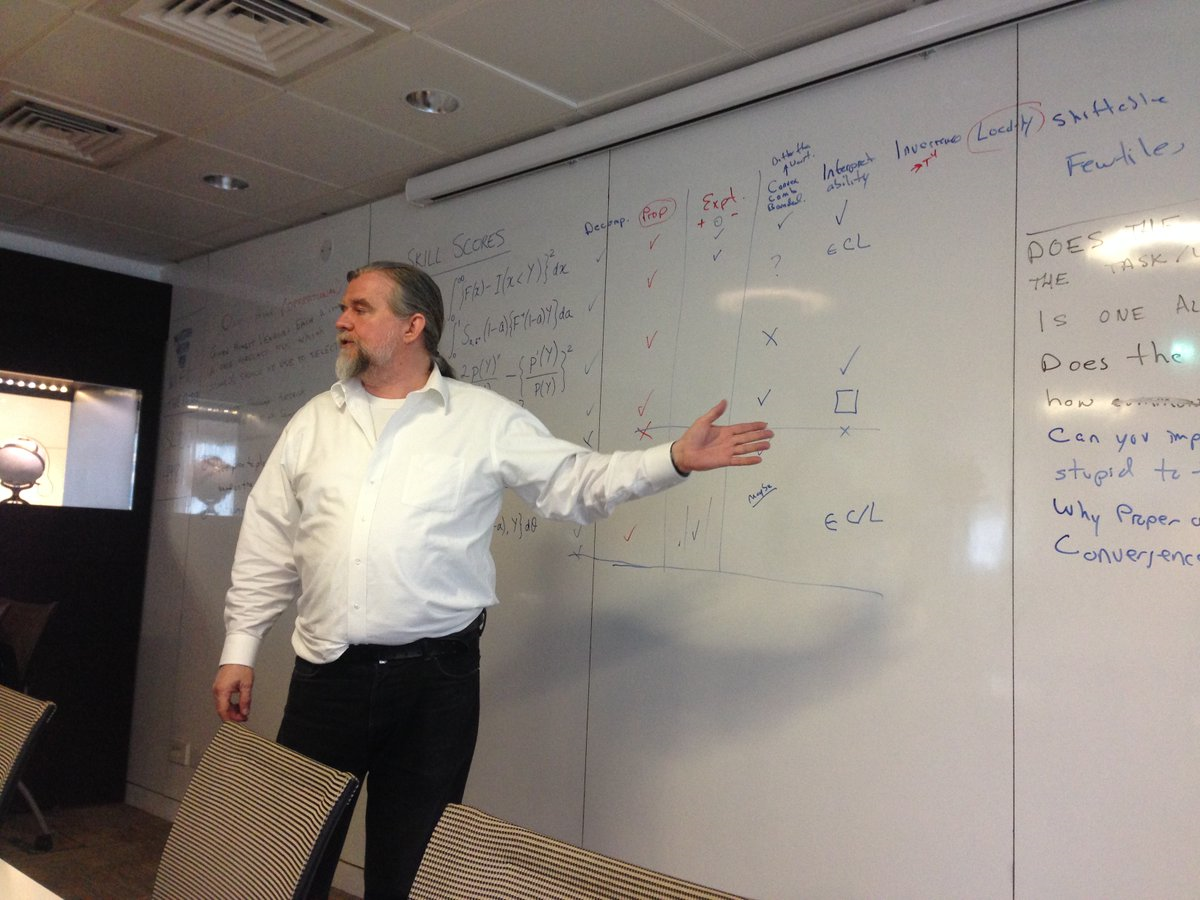
EPSIS aims to help provide clear methodology relating to the evaluation of probability forecasts in insurance. The outcomes will include both original research into the viability of various skill scores and the transfer of existing knowledge and expertise to practitioners in the insurance industry.

Funded by
LSE KEI fund
Lighthill Risk Network

Principal Investigator at LSE
Professor Leonard Smith

Project start date
1 February 2017

EPSIS Insurance Sector

EPSIS Meeting

Lighthill Risk Network logo

Print

The Risk Dynamics of Insurance Claims Disputes – clean

Summary
The project aims to create advances in relation to both volume litigation and to high value complex claims. This will include exploring AI and statistical predictive models for valuing disputes and predicting outcomes, predicting cost overruns and case length and managing litigation at a portfolio level.

Funded by
Berrymans Lace Mawer LLP (BLM)
LSE KEI fund

Principal Investigator
Professor Henry Wynn

Project duration
1 July 2018 – 30 June 2020

The LSE Team
Professor Henry Wynn
Professor Pauline Barrieu
Professor Milan Vojnović
Dr Wen Zhang

Read articles about the project
BLM partners with LSE on AI project‘ by Mark Dugdale, Claims Media, 16 February 2018

Insurance firm signs up academics to predict case outcomes‘ by Michael Cross, The Law Society Gazette, 13 February 2018

Leading law firm joins forces with LSE professors to find ways to predict litigation‘ by Nick Hilborne, Legal Futures, 13 February 2018

BLM Logo

Print

GLIMPSE
Gauging Limitations of Imperfect Model Prediction with Sculpted Ensembles – clean

Summary
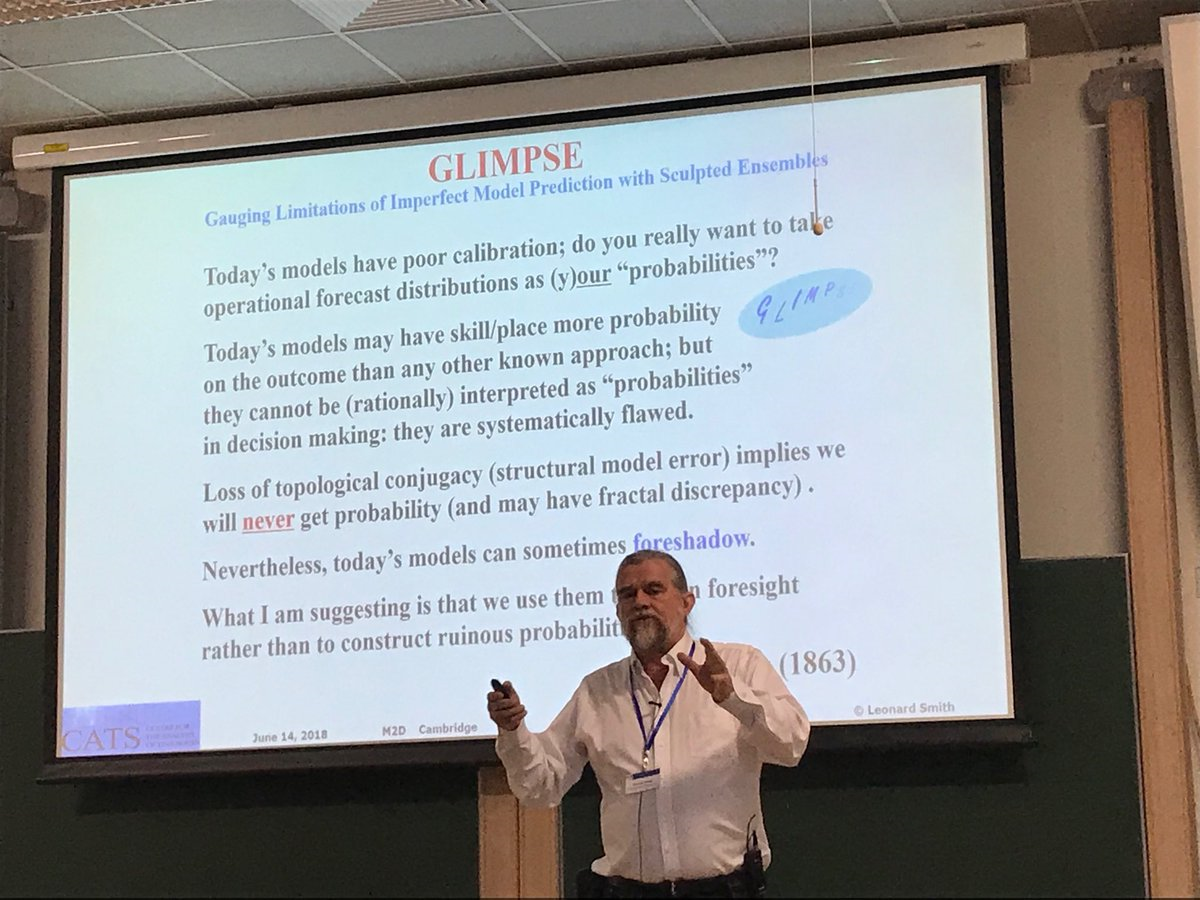
Novel, potentially deployable approaches to operational adaptation of infrastructure and transport for the future climate would prove of great value, given the very limited insight current climate model simulations are able to provide at the high spatial/temporal resolutions previously considered by design engineers and regulators. GLIMPSE will explore a game-changing approach to extreme event in the unknown climate of the future.

Funded by
EPSRC ReCoVER Network

Principal Investigator at LSE
Professor Leonard Smith

Grant reference
RFFLP018

Project Start  
1 January 2016

GLIMPSE talk 2018 Leonard Smith

EPSRC logo right

ECOPOTENTIAL
Improving Future Ecosystem Benefits Through Earth Observations – clean

Summary

This multi-partner project, led by Professor Antonello Provenzale at CNR, Italy, aims to improve terrestrial and marine ecosystem benefits in the face of increasing anthropogenic pressures. ECOPOTENTIAL will create a new unified framework for ecosystem studies and management of protected areas. The project will make best use of Earth Observation (EO) and monitoring data, and new modelling approaches will be developed able to include information from EO data; ecosystem services in current and future conditions will be assessed, and the requirements of future protected areas will be defined.

Reindeer population modelling
As part of the Horizon 2020 Ecopotential project and in collaboration with the University of Bergen and the National Research Council of Italy, CATS is working on modelling the wild reindeer population in Hardangervidda National Park in Central Norway. The research involves identifying the effect of hunting and weather conditions on the population with a view to understanding how the size of the population might be affected by climate change.

For more information visit the EcoPotential website: http://www.ecopotential-project.eu/

Publications
Bargmann, T., Wheatcroft, E., Imperio, S. and Vetaas, O.R. (2019) Effects of weather and hunting on wild reindeer population dynamics in Hardangervidda National Park. Population Ecology. 2019; 1-14. https://doi.org/10.1002/1438-390X.12030.

Funded by
EU H2020

Lead Research Organisation
Consiglio Nazionale delle Ricerche

Principal Investigator at LSE
Professor Leonard Smith

Grant reference
641762

Grant value (to LSE)
£180,994

Project duration
June 2015 – October 2019

ecopotential 0 European Union Flag

ReUseHeat
Recovery of Urban Excess Heat – clean

Summary
There is enough waste energy produced in the EU to heat the EU’s entire building stock; however, despite this huge potential only a restricted number of small scale examples of urban waste heat recovery are present across the EU. The objective of ReUseHeat is to demonstrate, at TRL8 first of their kind advanced, modular and replicable systems enabling the recovery and reuse of waste heat available at the urban level.

ReUseHeat explicitly builds on previous knowledge and EU funded projects (notably CELSIUS, Stratego and HRE4) and aims to overcome both technical and non technical barriers to the unlocking of urban waste heat recovery investments across Europe.

Four large scale demonstrators will be deployed, monitored and evaluated during the project, showing the technical feasibility and economic viability of waste heat recovery and reuse from data centres (Brunswick), sewage collectors (Nice), cooling system of a hospital (Madrid) and underground station (Bucharest). The knowledge generated from the demonstrators and from other examples across the EU will be consolidated into a handbook which will provide future investors with new insight in terms of urban waste heat recovery potential across the EU. Innovative and efficient technologies and solutions, suitable business models and contractual arrangements, estimation of investment risk, bankability and impact of urban waste heat recovery investments, authorization procedures are examples of handbook content. The handbook will be promoted through a powerful dissemination and training strategy in order to encourage a rapid and widespread replication of the demonstrated solutions across the EU.

For more information visit the ReUseHeat website:  http://reuseheat.eu/

Read the press release: http://www.ivl.se/english/startpage/top-menu/pressroom/press-releases/press-releases—arkiv/2017-08-31-smart-cities-can-heat-themselves.html

Funded by
EU H2020

Coordinated by
IVL Swedish Environmental Research Institute, Gothenburg

Principal Investigator at LSE
Professor Henry Wynn

Grant reference
767429
Project duration
1 October 2017 – 30 September 2021

LSE Researcher
Dr Edward Wheatcroft

European Union Flag Horizon 2020

WIDA
Weather Information for Disaster Anticipation – clean

Summary
As part of this fellowship Dr Erica Thompson will be working with the Start Network, a group of charities working on rapid response to humanitarian emergencies. She will assist the Start Network in their efforts to improve their use of weather forecast information in order to anticipate crises before they occur, so that resources can be allocated in advance, potentially saving both costs and lives.

Funded by
NERC (Innovation Placement)

Principal Investigator
Dr Erica Thompson

Grant reference
NE/R006873/1

Project duration
1 November 2017 – 30 June 2020

sunGetting ahead of deadly heat
Blog by Sarah Klassen, 5 June 2018
Dr Erica Thompson works with Start Network to forecast and mitigate a heatwave in Pakistan


Start Network logo


nerc logo

IOOS
Integrated Ocean Observing System – clean

Summary
Dr Ralph Rayner is the industry liaison for the US Integrated Ocean Observating System (IOOS). Dr Rayner acts as the information point for a broad range of relevant industries; implements and manages a network for the exchange of information; and organises outreach workshops which promote the socioeconomic benefits of ocean observations. He also supports the interface between US IOOS and regional initiatives in other countries as well as the interface with the United Nations coordinated Global Ocean Observing System.

For more information visit the IOOS website: https://ioos.noaa.gov/

Funded by
US National Oceanographic and Atmospheric Administration (NOAA)

Principal Investigator at LSE
Dr Ralph Rayner

Grant value (to LSE)
£365,000

Project start
1 October 2007

Dr Rayner gave a presentation on the Global Ocean Observing System at the CATS 10th Anniversary event in October 2010. See talk slides.

IOOS Emblem

NOAA

IRIS
Improving the role of information systems in anticipatory disaster risk reduction – clean

Summary
Humanitarian agencies are able to use weather (and other) forecasts to act in anticipation of humanitarian crises. For example, when a heatwave or hurricane is forecast, supplies can be moved into position early and emergency supplies positioned or pre-distributed. This reduces the overall impact and the cost of responding to the disaster. However, financing in advance of a disaster requires a high level of confidence in the forecast, to avoid the possibility of misallocated or wasted resources. Many forecasts are currently available but not all are accompanied by an assessment of the forecast quality. For example, it may be that the forecast is over-confident, predicting an event more times than it is actually observed, or it could be under confident, failing to predict events which do then occur. The project aims to develop and demonstrate a general method of measuring and displaying the information content of forecasts, using a novel idea which is based on existing research and freely available data. This will allow humanitarian agencies to act confidently in anticipation of humanitarian crises when there is sufficient information in the forecast, and to implement forecast-based financing schemes such as insurance or anticipatory funding allocation only when there is known to be confidence that the scheme will be effective.

Funded by
NERC (Building Resilience with financial instruments call)

Grant reference
NE/R01423X/1

Principal investigator
Professor Leonard Smith

Researcher Co-Investigator
Dr Erica Thompson

Researcher
Dr Liz Stephens

Project duration
1 January 2018 – 31 December 2020

Project Partners:
Botswana Institute for Technology
Lloyd’s of London
Start Network

sunGetting ahead of deadly heat
Blog by Sarah Klassen, 5 June 2018
Dr Erica Thompson works with Start Network to forecast and mitigate a heatwave in Pakistan


nerc logo

Act Today
Adapting Agriculture to Climate today, For Tomorrow

Act Today
Adapting Agriculture to Climate today, For Tomorrow
A Columbia World Project

Summary

Adapting Agriculture to Climate Today, For Tomorrow is a Columbia World Project. CATS is collaborating on the ability of climate models to inform risk reduction, through forecasts and preparedness in the areas of heat waves and hydrometeorological disasters, both of which impact many facets of local and national food systems.

Principal Investigator
Professor Leonard Smith

Research Fellow
Dr Hannah Nissan

Funded by
International Research Institute for Climate and Society, Earth Institute, Columbia University

Project Duration
3 December 2018 – 2 December 2020